Second Cutting: Is Your Hay Equipment Actually Covered on a Wise County Homeowners Policy?
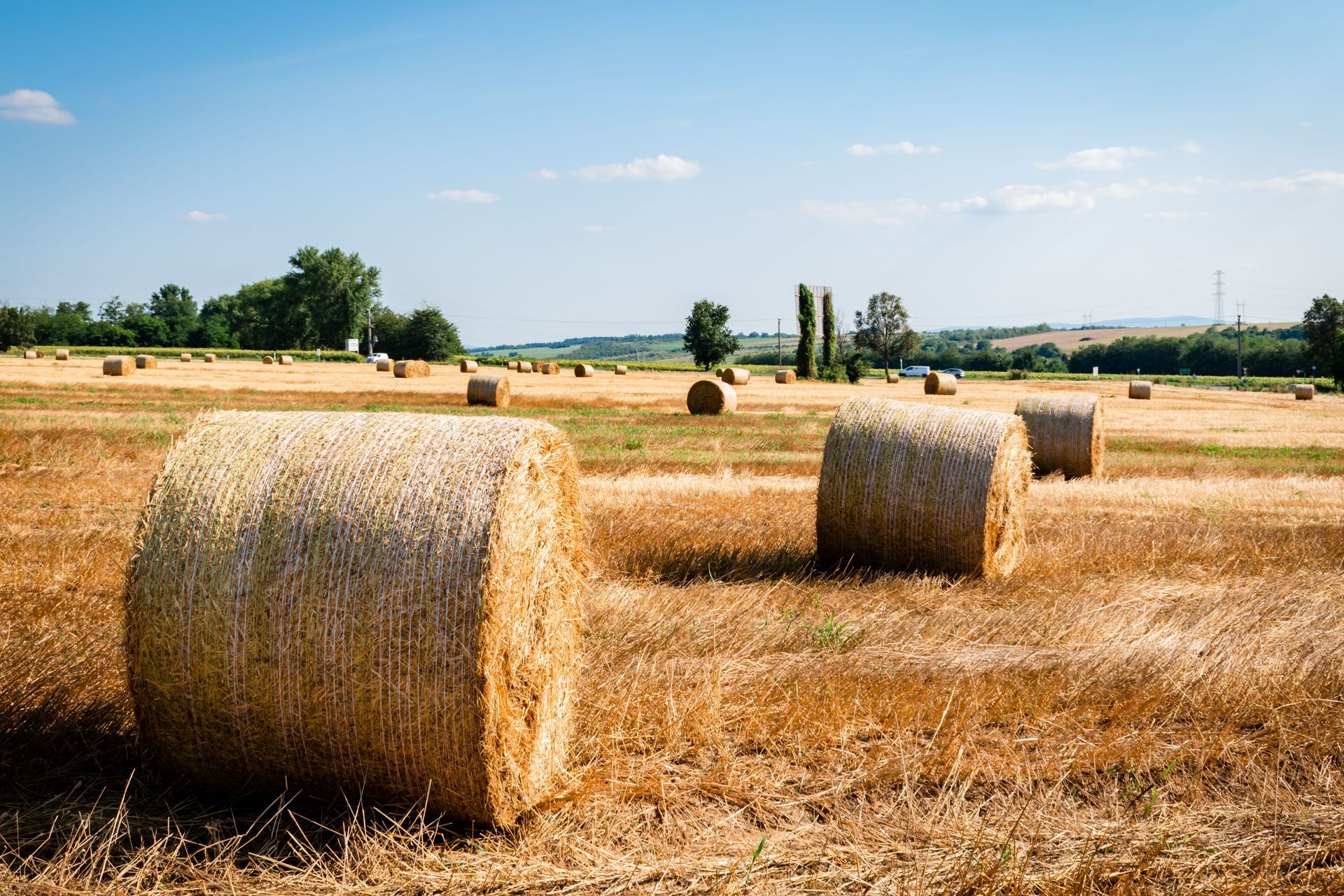
A standard homeowners policy usually stops covering farm equipment the moment it's used for hay production, so a Wise County landowner cutting hay this fall needs to confirm what's actually on the policy before the baler rolls out of the shed.
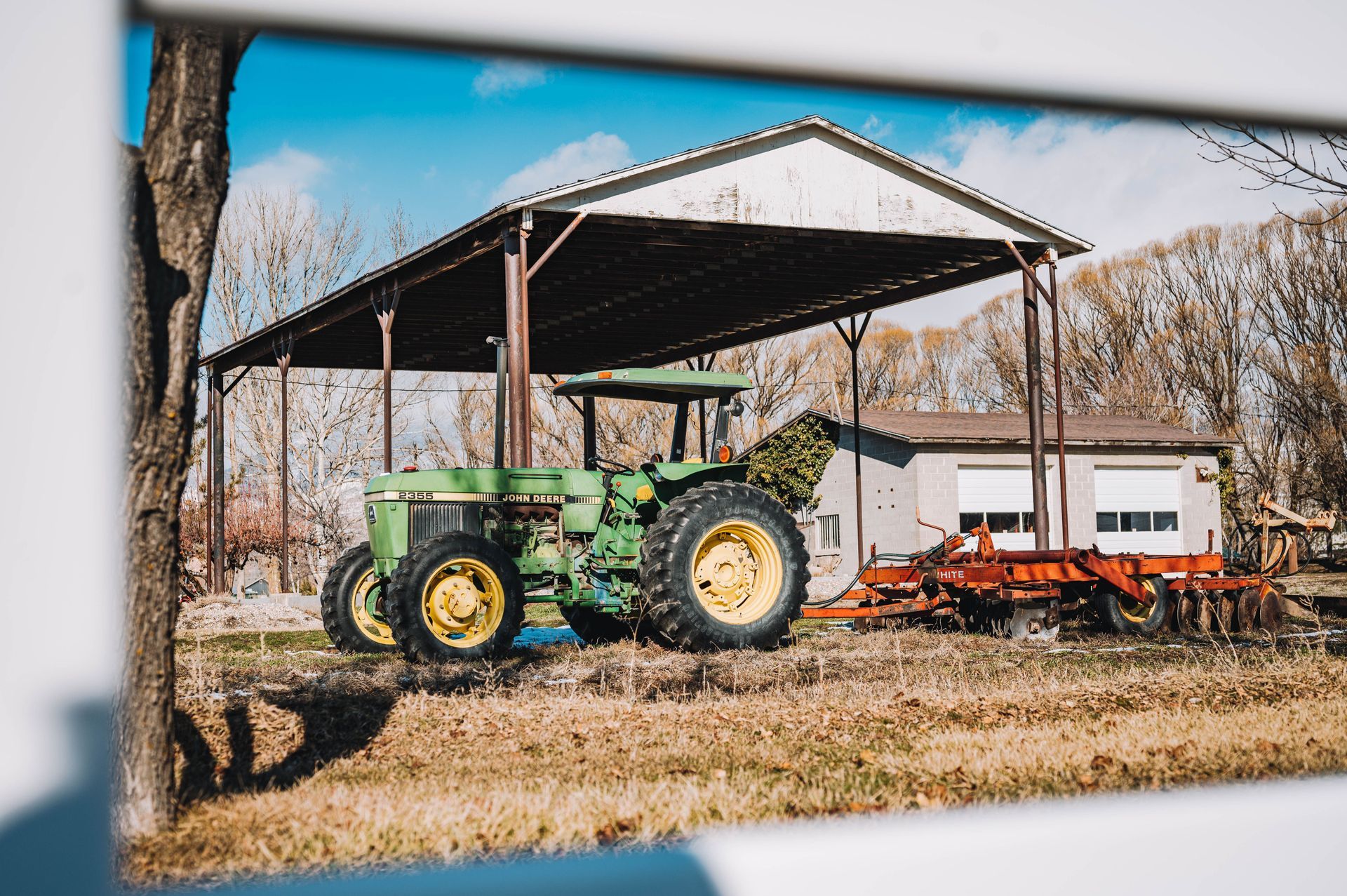
Picture a landowner running about forty acres outside Decatur, mostly coastal Bermuda cut twice a year to feed his own cattle and sell the extra to a couple of neighbors. His tractor and baler sit in an open-sided shed his homeowners policy already lists as another structure, so when someone backs a trailer into the baler at 2 a.m. and drives off with two tow chains and a hydraulic hose still attached, he figures the claim will be straightforward. His agent has to explain that the shed is covered. The baler inside it, being used for hay, mostly is not.
A standard homeowners policy typically excludes or sharply limits farm equipment like a tractor, baler, or mower once it is used for hay production, even when the equipment sits on the same residential property the policy already insures. A Wise County landowner cutting hay this fall needs a separate farm-equipment endorsement or an inland-marine equipment floater, not an assumption that the homeowners (HO) policy already has it handled.
That gap is easy to miss precisely because the shed the equipment sits in usually is covered under Coverage B, other structures. The building and the machine inside it are two different questions to a Texas carrier, and only one of them is typically answered by a standard HO-3 form.
Why a homeowners policy stops short of farm equipment
Most HO forms, including the common HO-3 written across North Texas, are built around personal property used for ordinary residential purposes: furniture, appliances, a lawn mower for the yard. Once a piece of equipment is being used in connection with a farming operation, even a small one, most policies either exclude it outright or cap coverage for "farm machinery" at a token limit nowhere near what a tractor or baler is actually worth. The carrier isn't being difficult; the HO form was never priced or underwritten to carry that kind of equipment risk in the first place. Even a broader rural homeowners policy, one already built around wells, fencing, and outbuildings on an acreage property, tends to draw the same line once the equipment itself is actively working a hay field rather than just sitting in a shed.
That distinction surprises a lot of landowners because the tractor sits on the same property, in the same outbuilding, as everything else the policy insures without a second thought. The exclusion isn't about location. It's about use, and hay production is squarely a farming use no matter how small the operation is.
The fix: a farm endorsement or a scheduled equipment floater
The practical fix is either a farm personal property endorsement added to an existing homeowners or farm-and-ranch policy, or a standalone inland-marine equipment floater that schedules each piece of equipment by make, model, and value. Either route puts the tractor, baler, mower, and rake on the books by name instead of leaving them to compete for space inside a general personal-property limit that was never sized for them.
Farm personal property endorsement. Added to an existing homeowners or farm-and-ranch policy; typically the simpler route for a landowner with a modest amount of equipment tied to one property.
Scheduled inland-marine equipment floater. A standalone policy that lists each piece of equipment individually, often with broader named-peril or open-peril coverage than a farm endorsement offers, and coverage that can follow the equipment off the property.
The pattern we see in this kind of file is a tractor that was never scheduled anywhere, farm endorsement or floater, so a hailstorm that dents the hood and cracks a light housing turns into an out-of-pocket repair because nothing on the policy actually responds to equipment damage. Scheduling it afterward takes one phone call; the repair bill from before that call doesn't get any smaller for the delay. It's a different fix from other structures coverage on the shed itself, which protects the building but was never going to protect the machine parked inside it.
Hobby hay versus a commercial operation changes which form applies
Cutting hay to feed your own livestock and selling the occasional extra round bale to a neighbor is generally treated as incidental to a residential property, and a farm personal property endorsement usually handles it without much friction. Once hay becomes a real income stream, regular sales, a standing customer, acreage dedicated specifically to production rather than grazing, the operation starts looking more like a business to an underwriter, and that can shift which policy form even applies, sometimes moving the whole property toward a dedicated farm and ranch policy rather than a homeowners policy with an endorsement bolted on.
There's no single acreage number or dollar figure that draws that line the same way for every carrier, which is exactly why it's worth a conversation rather than a guess. A landowner who assumes hobby-level treatment still applies after quietly growing into a real hay business is the same shape of gap as the equipment exclusion itself: a use the policy was never written to match.
Liability is a separate question from the equipment itself
Physical damage to the tractor or baler is one question. Whether that same piece of equipment causes an injury or property damage, to a neighbor, a hired hand, or someone else's fence line, on or off your property, is a completely different one, and it runs through the liability side of the policy rather than the property side. A standard homeowners liability section can carry the same farming-use limitations that its property section does, which means a landowner can be adequately covered for the equipment's value and still be thin on the liability that follows an accident involving it.
That's a separate conversation from the equipment's own coverage, but it's worth having both conversations together, once for the machine's value and once for what it could do to someone or something else, rather than assuming one covers the other.
Fall cutting is when the gap stops being theoretical
Second and third cutting in North Texas typically falls in September and October, which means the tractor and baler that sat mostly idle since early summer are back in daily use right about now. A coverage gap that was purely theoretical while the equipment sat in the shed becomes a real exposure the moment it's running through a field for a full day, hitched to a mower, loaded onto a trailer for a delivery, or simply moving between fields on a county road.
That's the practical reason to check this now rather than at renewal six months from now: the equipment most likely to get damaged, stolen, or involved in an accident is the equipment that's actually being used, and this is the stretch of the year when it is.
What to check before the next cutting
Pull your current policy and look specifically for how it treats farm machinery, not just outbuildings; the shed's coverage doesn't tell you anything about what's covered inside it. If the equipment isn't scheduled anywhere by name, that's the gap to close before, not after, the next time it rolls out of the barn.
Working with an agent in Wise County who handles rural and ag-adjacent properties regularly can help you decide whether a farm endorsement or a standalone floater fits your setup better, and confirm the liability side matches the equipment side rather than assuming one automatically covers the other.
Educational only; coverages and availability vary by carrier. TAP Insurance Agency, PLLC — Rhome, TX, licensed in Texas and Oklahoma.
— TAP Insurance Agency · Call (800) 666-2254 — or text QUOTE to (817) 646-6700 · tapinsuretx.com