Driving to the State Fair of Texas? What Your Auto Policy Covers in the Parking Lot
Liability coverage protects other people's property, not your own car sitting in a Fair Park lot, so it is worth knowing which part of your policy actually responds before you park for the day.
Say a dad parks his truck in the grass lot off Fitzhugh, walks the half mile into Fair Park with his kids for a Saturday of corny dogs and the Cotton Bowl parade, and comes back seven hours later to a spider-webbed windshield and a note tucked under his wiper that just says "sorry, hit your truck, no info left" in someone else's handwriting, whoever it was clearly not sorry enough to actually leave a name. His insurance agent's first question isn't about the note. It's whether he's carrying comprehensive coverage, because that single word is about to decide whether the repair is free or out of pocket.
Comprehensive coverage, not liability, is what pays for a break-in, a hail ding, or a hit-and-run scrape picked up in a parking lot, so the coverage that actually protects a car sitting in a Fair Park lot is the one most state-minimum drivers never added. Liability insurance pays for damage you cause to someone else's car or property; it pays nothing toward your own vehicle no matter who hit it or how it happened while parked.
That distinction gets tested every fall when the State Fair of Texas fills Fair Park's lots for its run from late September into mid-October, and it is worth understanding before the car is sitting unattended for hours, not after a stranger has already come and gone.
Comprehensive versus collision: which one actually answers a parking-lot claim
Comprehensive coverage responds to damage that happens to your car when you are not driving it or when another vehicle was not directly involved in a moving collision: theft, vandalism, a shopping cart or a dropped tailgate denting a door, hail, fire, or a break-in through a window. Collision coverage responds when your car hits, or is hit by, another vehicle or object while it is being driven, which covers a crash on the way in but is the wrong coverage for something that happens to a parked, empty car. Knowing what to do after a fender-bender on the drive in is a separate checklist entirely from what happens to a car sitting alone in a lot for the afternoon, and mixing the two up is how a driver ends up filing the wrong kind of claim.
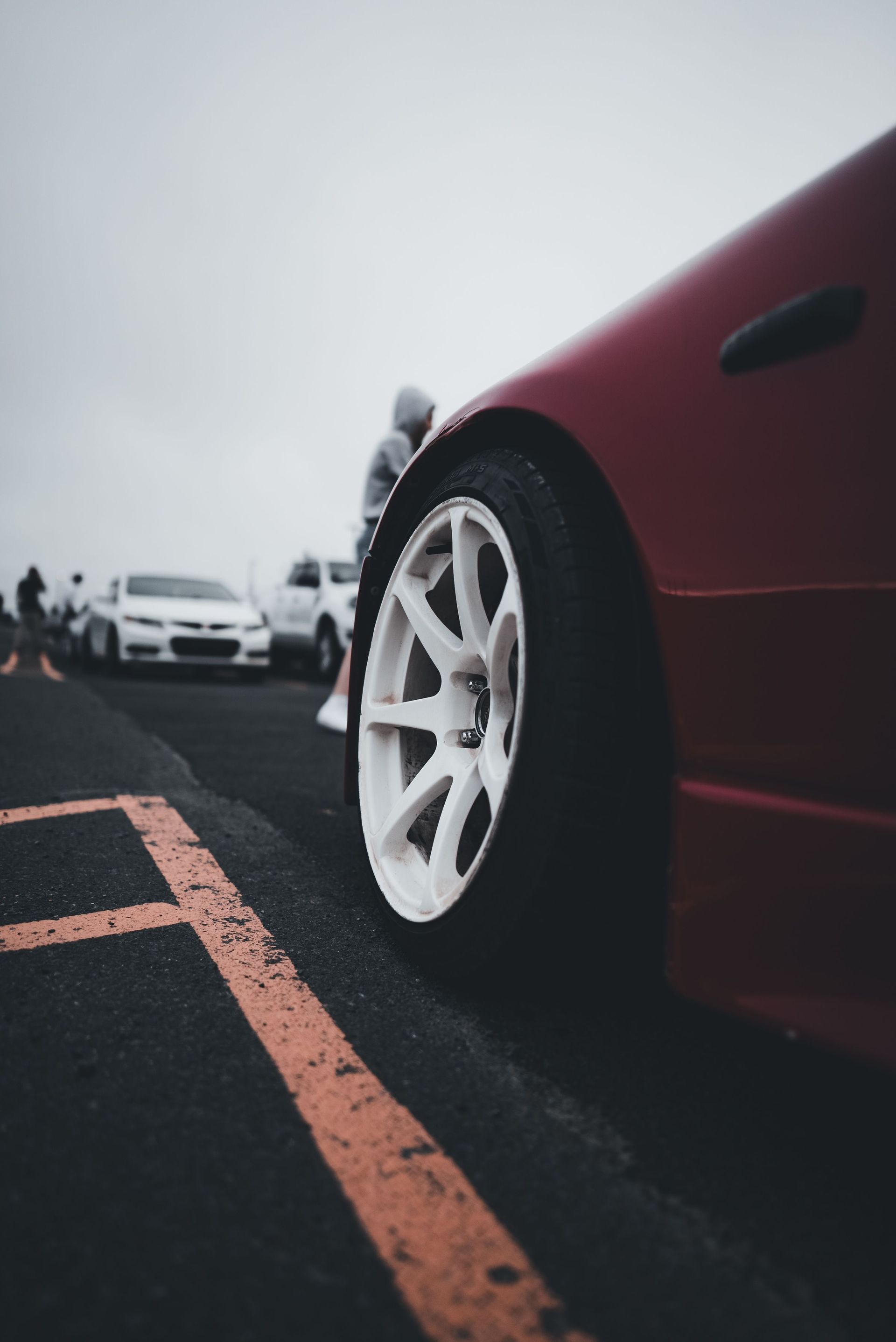
A crowded Fair Park lot produces exactly the kind of damage comprehensive coverage was built for: a car door swung open too hard by a stranger walking past, a window smashed for a purse left on the seat, a scrape from someone backing out blind between rows of parked trucks and SUVs. None of that involves your car moving, so collision coverage was never going to be the answer regardless of what caused the damage.
What liability-only actually leaves uncovered
Texas requires liability coverage to drive legally, and a lot of paid-off older vehicles carry nothing beyond that state minimum because it is the cheapest way to stay legal. Liability pays for the other driver's car and medical bills when you are at fault; it was never designed to pay for damage to your own vehicle, whether that damage happens on the highway or in a gravel lot at Fair Park.
State-minimum liability. Pays the other party's repair and medical costs when you cause a crash; pays nothing toward your own car regardless of who caused the damage or where it happened.
Liability plus comprehensive and collision. Adds coverage for your own vehicle: comprehensive for theft, vandalism, hail, and fire; collision for a crash with another vehicle or object while driving.
A driver carrying only the state minimum into a State Fair parking lot is betting that nothing happens to the truck itself while it sits there for the day. For an older vehicle with modest value, that can be a reasonable bet the owner has made on purpose. For a newer or financed vehicle, it usually is not one the owner meant to make at all.
When the other driver never leaves a name
A hit-and-run in a crowded lot is common precisely because it is easy to do without getting caught: no witness, no camera angle that catches a plate, a driver who simply backs out and leaves. When the at-fault driver can't be identified, liability coverage has no one to attach to, and it is uninsured motorist property damage coverage, not standard liability, that typically responds to that kind of loss, where it applies at all. In many cases, comprehensive coverage on your own policy is what ends up paying for hit-and-run damage to a parked car, since the loss looks and behaves like vandalism once no other driver can be identified.
The pattern we see in this kind of file is a parked car struck overnight outside a North Texas event, no note, no witness, with the claim ultimately paying out under the comprehensive portion of the policy rather than through any liability channel, once it's clear no other driver can be traced. That outcome depends entirely on which coverages are actually on the policy before the incident, not on anything that can be added after the fact. It is also a different question from how driving patterns affect your rate over the course of a year; a single hit-and-run claim doesn't retroactively change your commute classification, but it is still worth confirming your policy protects the car sitting still in a lot, not only the car in motion on the way there.
A rideshare or designated driver changes more than the drive home
Getting dropped off at Fair Park instead of parking there removes the parking-lot exposure entirely for the hours you're inside, since a car that never sits in the lot can't be broken into or dented while you're gone. It also removes the other risk that climbs during a big event: driving home afterward, when traffic around Fair Park is heaviest and a full day on your feet has you more tired behind the wheel than when you arrived. Neither swaps out for the other; a rideshare in cuts parking-lot risk, and a rideshare or a sober designated driver home cuts a different kind of risk on the drive back.
This isn't a pitch for avoiding the Fair. It's simply worth knowing that the parking lot and the drive home are two separate risk windows, and a little planning around both is cheap compared to either one going wrong.
DFW traffic during the Fair's run adds up over three weeks
The State Fair of Texas runs for roughly three weeks each fall, and Fair Park draws heavy vehicle and pedestrian traffic across all of them, which means more cars converging on the same surface lots, more pedestrians crossing between rows, and more opportunities for the kind of low-speed contact that produces exactly the parking-lot claims described above. None of that requires an unusual event to happen; it is simply what more vehicles in a smaller space for a longer stretch of time tends to produce.
It is worth treating that stretch as a reasonable moment to actually check what your policy covers, rather than assuming it already matches what you'd want it to do if something happened while your car sat in a gravel lot for the afternoon.
Checking your coverage before you park for the day
The fastest way to know where you stand is to pull up your policy's declarations page and look for comprehensive coverage listed as its own line, separate from liability. If it isn't there, or if you're not sure what the deductible actually is, that's a five-minute call worth making before the Fair, not after a windshield turns up cracked.
Requesting an auto insurance quote is also a reasonable move if you've been carrying state-minimum coverage on a vehicle that's worth more than you'd want to absorb out of pocket after a single bad afternoon in a crowded lot.
Educational only; coverages and availability vary by carrier. TAP Insurance Agency, PLLC — Rhome, TX, licensed in Texas and Oklahoma.
— TAP Insurance Agency · Call (800) 666-2254 — or text QUOTE to (817) 646-6700 · tapinsuretx.com